Keeping children safe online: how to support safety, balance and confidence from the start
Internet-enabled screens are now part of everyday family life: phones, tablets, smart TVs and connected devices often appear long before children can understand what they are seeing or how online spaces work. You may be wondering how to protect your child from content they’re not ready for, how much screen use feels appropriate, or how to set boundaries without constant stress or conflict.
For parents of babies, toddlers and preschool children, these worries can feel particularly heavy. Advice can be conflicting, conversations online can feel alarmist, and it’s easy to feel caught between wanting to protect your child and recognising that technology is here to stay. Many parents worry they’re either doing too much or not enough, without clear reassurance that they’re on the right path.
The reality is that keeping children safe online isn’t about perfection, strict rules or removing screens altogether. It’s about understanding how young children experience online content, setting thoughtful boundaries, and building strong foundations of trust and communication. When adults stay involved and intentional, children are far more likely to feel secure and supported as their digital world grows.
What parents need to know about keeping children safe online
Online safety starts earlier than many parents realise
When people think about online safety, they often picture older children, social media or gaming. In reality, online safety begins much earlier. Babies and toddlers observe adults using phones and tablets every day. Preschool children may watch programmes online, play simple games or video call relatives. Smart TVs and connected devices mean that many familiar devices now link directly to the internet.
At this age, children don’t understand how online content is selected or filtered. Suggested videos, adverts and autoplay features can appear without warning. Young children experience all of this as one continuous stream, without the context adults bring.
This is why online safety in the early years is not about expecting children to manage risk themselves. It’s about adult guidance, supervision and shared experiences.
If your main worry is what your child might see online, how content changes unexpectedly, or how to help your child feel safe if something feels confusing or upsetting, this is explored in depth in the eBook Keeping Children Safe Online. It focuses on emotional safety, adult involvement and how to respond calmly when things don’t go as planned.
Young children experience screens very differently to adults
Children under five process information in a literal and sensory way. Bright colours, sudden noises and fast-paced content can feel intense, even when material is designed for children. A short clip that seems harmless to an adult can feel overwhelming or frightening to a young child.
Because children are still developing emotional regulation and language, they may not be able to explain what they’ve seen or how it made them feel. Instead, reactions may show up later through behaviour, mood, sleep or play.
Understanding this helps parents respond with empathy rather than alarm, and supports more thoughtful decisions around screen use.
Early experiences shape later confidence
What children learn about screens in the early years sets the tone for later childhood. Children who are used to shared screen use, clear routines and calm conversations learn that online spaces are not secret or private. They learn that adults help manage digital experiences and that it’s always okay to ask for help.
These foundations matter even more as children move into primary school, where independence increases and online spaces become more complex.
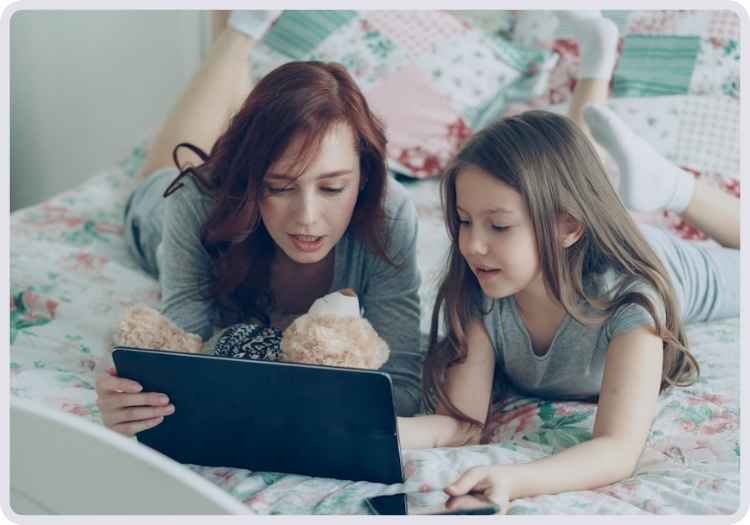
A shared approach is central to online safety
Practical ways to support online safety and healthy screen use
1. Keep online experiences shared
For toddlers and preschool children, internet-enabled screens are best used alongside a trusted adult. Shared use allows you to notice what appears on screen, observe your child’s reactions and step in calmly if something changes.
This shared approach is central to online safety. It reassures children that adults are there to guide and protect them, rather than leaving them to make sense of online content alone. If your child has ever looked unsettled by something on a screen, this adult presence makes all the difference.
The eBook Keeping Children Safe Online explores shared use in detail, including how to respond if something unexpected appears and how to build trust without fear.
2. Create predictable routines around screens
Children feel safer when they know what to expect. Predictable routines around when screens are used, how long for, and what happens afterwards help reduce frustration and emotional overload.
Clear routines also support healthy habits. For example, keeping screens out of bedrooms or having calm transitions before bedtime helps protect sleep and emotional regulation.
If your main challenge is how much screen time feels right, how to set age-appropriate limits, or how to manage resistance when screens are switched off, this is where Screen Time Guidelines for the Early Years is especially helpful
3. Focus on quality and pace, not just time
Not all screen time has the same impact. Calm, slower-paced content is often easier for young children to process than fast-moving clips or short videos that change rapidly. Interactive content used with an adult can feel very different from passive viewing.
Watching how your child responds to content is just as important as watching the clock. Some children are more sensitive to stimulation and benefit from shorter, calmer screen experiences.
This balance between what children watch and how it affects them sits at the heart of healthy screen habits, explored in depth in Screen Time Guidelines for the Early Years.
4. Use simple, reassuring language about safety
Online safety conversations don’t need to be detailed or technical. Simple messages, repeated often, are far more effective for young children, such as:
“Screens are for using with a grown-up.”
“If something feels confusing, we can stop.”
“Grown-ups help choose what’s safe.”
These messages build understanding without creating fear. Keeping Children Safe Online offers guidance on how to have these conversations calmly and consistently, especially after a child has seen something worrying.
5. Balance screens with plenty of offline experiences
Play, movement, conversation and hands-on exploration are essential for young children’s development. Screens should sit alongside, not replace, these experiences. Screen-free times and spaces help children stay connected to the world around them and support emotional wellbeing.
If you’re looking for ideas on creating balance without guilt, Screen Time Guidelines for the Early Years focuses heavily on screen-free routines, play and modelling healthy habits as a family.

Supervision, shared use and conversation are key
What this looks like in practice
When shared use builds confidence
Four-year-old Noah enjoyed watching online programmes on a tablet. His parent stayed nearby and talked about what they were watching together. When an advert appeared unexpectedly, the parent calmly closed it and explained why. Over time, Noah began handing the tablet back whenever something unfamiliar appeared, showing he trusted the adult to help.
When routines reduce stress
Five-year-old Isaac struggled when screen time ended suddenly. Introducing predictable routines and gentle warnings helped him feel prepared, reducing frustration and making boundaries feel supportive rather than restrictive.
When emotional responses guide decisions
Three-year-old Freya became unsettled after watching short online clips. Her parent noticed changes in mood and shortened screen time, choosing calmer content and staying close. Screen use quickly became more relaxed and enjoyable again.
These moments highlight how safety and balance often grow through observation, connection and small adjustments.
Frequently asked questions about keeping children safe online
When should I start thinking about online safety?
As soon as your child is exposed to internet-enabled screens. Early guidance builds strong foundations.
Do I need parental controls?
Controls can help, but they work best alongside supervision, shared use and conversation.
What if my child sees something upsetting?
Stay calm, reassure your child and talk simply about what happened. Let them know they are safe and supported.
How much screen time is okay for young children?
There is no single answer. It is widely recommended that children under two should only use screens for video calls to family members. As children grow older, focus on balance, content quality and how your child responds.
Is it okay for my child to use a tablet alone?
For young children, shared use is recommended. Independence can grow gradually with adult support.
How do I talk about online safety without frightening my child?
Use calm, reassuring language and focus on support rather than danger.
Do these foundations still matter once my child starts school?
Yes. Early habits make later conversations easier as independence increases.
Conclusion
Keeping children safe online isn’t about removing screens or feeling constantly on edge. It’s about understanding how young children experience online content, setting thoughtful boundaries, and staying closely connected as your child grows. When children know that adults are there to guide and protect them, online safety becomes part of everyday life rather than a source of anxiety.
This blog offers a starting point, but different families need support in different areas. If your main concern is online safety, unexpected content and emotional reassurance, the eBook Keeping Children Safe Online provides calm, practical guidance you can return to whenever you need it. If your focus is screen time balance, routines and healthy habits, Screen Time Guidelines for the Early Years offers clear, realistic support grounded in child development.
Many parents find that the two eBooks work best together: one supporting safety and confidence, the other supporting balance and wellbeing. Whichever questions you’re starting with, Pages for Parents is here to walk alongside you as your child’s digital world grows.
Keeping Children Safe Online
39-page PDF eBook
Shape how your child approaches the online world with confidence and understanding.